

The Original Black Jesus
Earl “The Pearl” Monroe, a Hall of Famer, is one of the best guards in Knicks history, forming the legendary backcourt with Walt Frazier and leading New York to the 1973 NBA Championship retired 1980

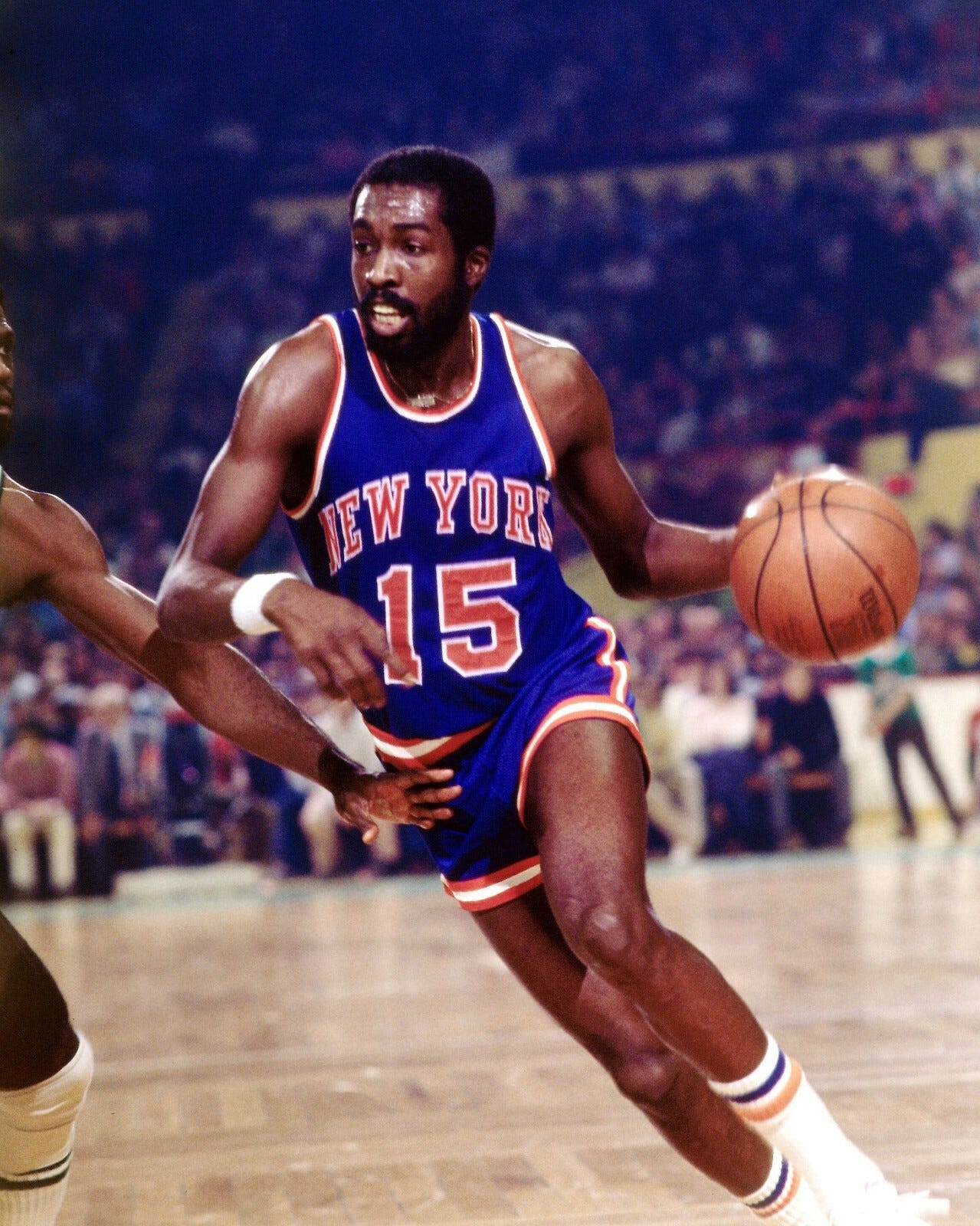
Born on November 21, 1944, in Philadelphia, Pennsylvania, Monroe grew up in a city renowned for its fierce basketball competitiveness. Some well-known NBA players from Philadelphia include Kobe Bryant, Wilt Chamberlain, Kyle Lowry, and Rasheed Wallace. From a young age, he showcased remarkable skills on the South Philadelphia playgrounds, particularly in the Baker League, one of the city’s most competitive recreational leagues.
Monroe attended Bertram High School from 1959 to 1963, where he developed his scoring and ball-handling skills. Despite his reputation as a playground legend, many collegiate programs overlooked him, reflecting the era’s bias against players perceived as “playground” athletes. After high school, Monroe attended a Temple University-affiliated preparatory school and briefly worked as a shipping clerk in a paper-plate factory while remaining active in basketball. He continued to play at Leon Whitley’s recreation center, where he caught the attention of Whitley, a former point guard for Winston-Salem Teacher College (now Winston-Salem State University).Earl Monroe Bio
Whitley encouraged Monroe to attend Winston-Salem State and play for Hall of Fame coach Clarence “Big House” Gaines, setting the stage for the next chapter of his basketball career.
Today, Monroe’s legacy is honored in the Bronx with the Earl Monroe New Renaissance Basketball School, a high school named after him that serves students with diverse academic and athletic achievements
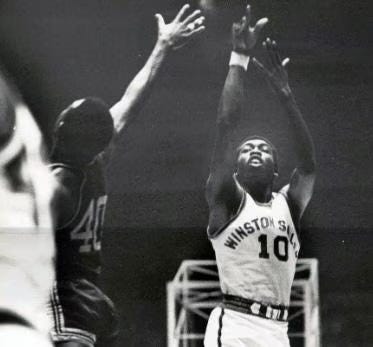
College Career at Winston-Salem State
From 1963 to 1967, Earl Monroe attended Winston-Salem State University (then Winston Salem Teacher College), where he played under the legendary Hall of Fame coach Clarence “Big House” Gaines. Coming from a background where many college coaches overlooked playground stars, Monroe quickly proved he belonged at the collegiate level. He developed into one of the nation’s most electrifying guards, known for his twisting, spinning, and double-pump dribbling moves, as well as his incredible scoring ability.
During his senior season, Monroe averaged 41.5 points per game, setting the NCAA Division II single-season scoring record. Over his four-year career, he amassed 2,935 points, maintaining a 26.7 points-per-game average. His scoring exploits, creativity on the court, and clutch performances made him a fan favorite. Luix Overbea, a sportswriter for the Winston-Salem Journal, began referring to Monroe’s points as “Earl’s pearls”, and soon fans were chanting “Earl, the Super Pearl” during home games.
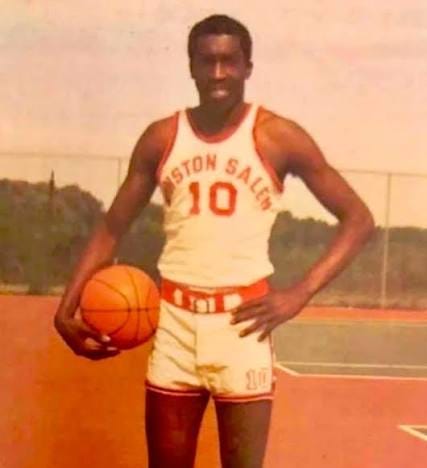
Monroe led Winston-Salem State to the 1967 NCAA College Division National Championship, marking the first time a historically black college or university (HBCU) won an NCAA championship in any sport.
For his dominant play, he was named the Most Outstanding Player of the tournament and earned NCAA College Division Player of the Year honors. That same year, he was also selected as a Converse First Team All-American.
Beyond his athletic achievements, Monroe demonstrated a commitment to academics. He graduated with a B.A. in Education and successfully passed the national teaching exam, proving that his talents extended off the court as well. His remarkable college career established him as one of the premier scorers and innovators in basketball history and set the stage for his legendary professional career in the NBA. Earl also has a book that was Co-written with Quincy Troupe, Earl “The Pearl” Monroe’s autobiography published in 2013, follows his rise from a tough Philadelphia neighborhood to NBA stardom with the Bullets and Knicks.
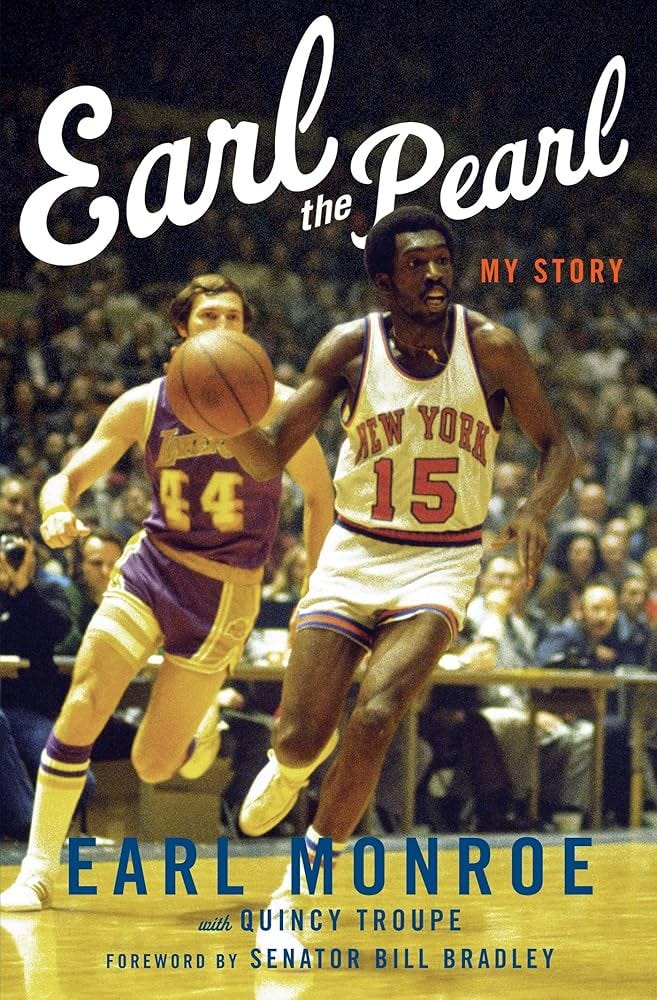
He also reflects on his life, the evolution of basketball, and his vision for the game’s future.Earl Monroe Book
The Pearl Playing Career
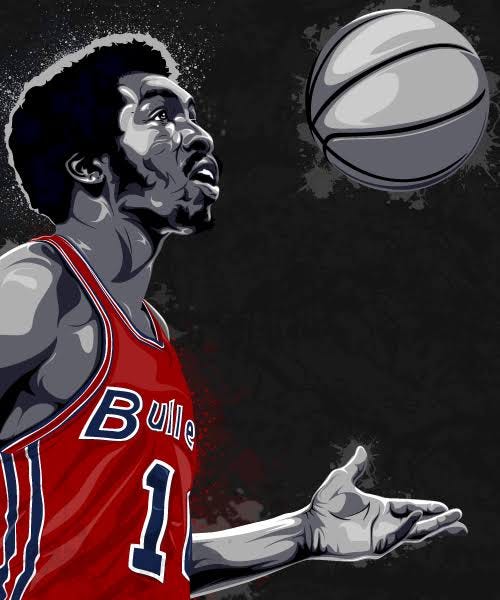
Earl “The Pearl” Monroe began his professional career with the Baltimore Bullets, selected 2nd overall in the 1967 NBA Draft.
From the very start, Monroe established himself as one of the most electrifying guards in the league. In his rookie season, he averaged 24.3 points per game, earning NBA Rookie of the Year honors in 1968 and a spot on the All-Rookie First Team. His herky-jerky dribbles, spins, and double-pump fakes quickly earned him the nickname “The Pearl or Black Jesus”, reflecting his reputation as a showman and creative scorer. Over his four seasons in Baltimore, Monroe averaged over 20 points per game each year, peaking at 25.8 PPG in 1968–69.
Monroe formed a formidable offensive partnership with Gus Johnson, creating one of the most potent fast-break duos in NBA history. He made his first NBA All-Star appearance in 1969 and was selected to the All-NBA First Team the same year. Monroe led the Bullets to three consecutive playoff appearances from 1968–69 to 1970–71, highlighted by a trip to the 1971 NBA Finals, where Baltimore fell to the Milwaukee Bucks.
One of Monroe’s most iconic performances came during his rookie season, when he scored 56 points against the Los Angeles Lakers, which at the time was the third-highest rookie scoring total in NBA history. Monroe’s impact and excellence in Baltimore were recognized with the retirement of his No. 10 jersey by the Washington Wizards, the franchise’s modern name
Midway through the 1971–72 season, Monroe was traded to the New York Knicks in a move that brought his individual brilliance to a team known for its team-oriented, collective style of play. Contract dispute caused the Bullets to trade Monroe, thankfully it was to the Knicks to create what we know as today “The Rose Royce Backcourt”. Initially, he struggled to adapt to the Knicks’ system, which emphasized sharing the ball and structured team offense, but he eventually found his rhythm. Monroe paired with Walt “Clyde” Frazier to form the legendary “Rolls Royce” backcourt, a combination of skill, flair, and efficiency that became one of the most celebrated backcourts in NBA history.
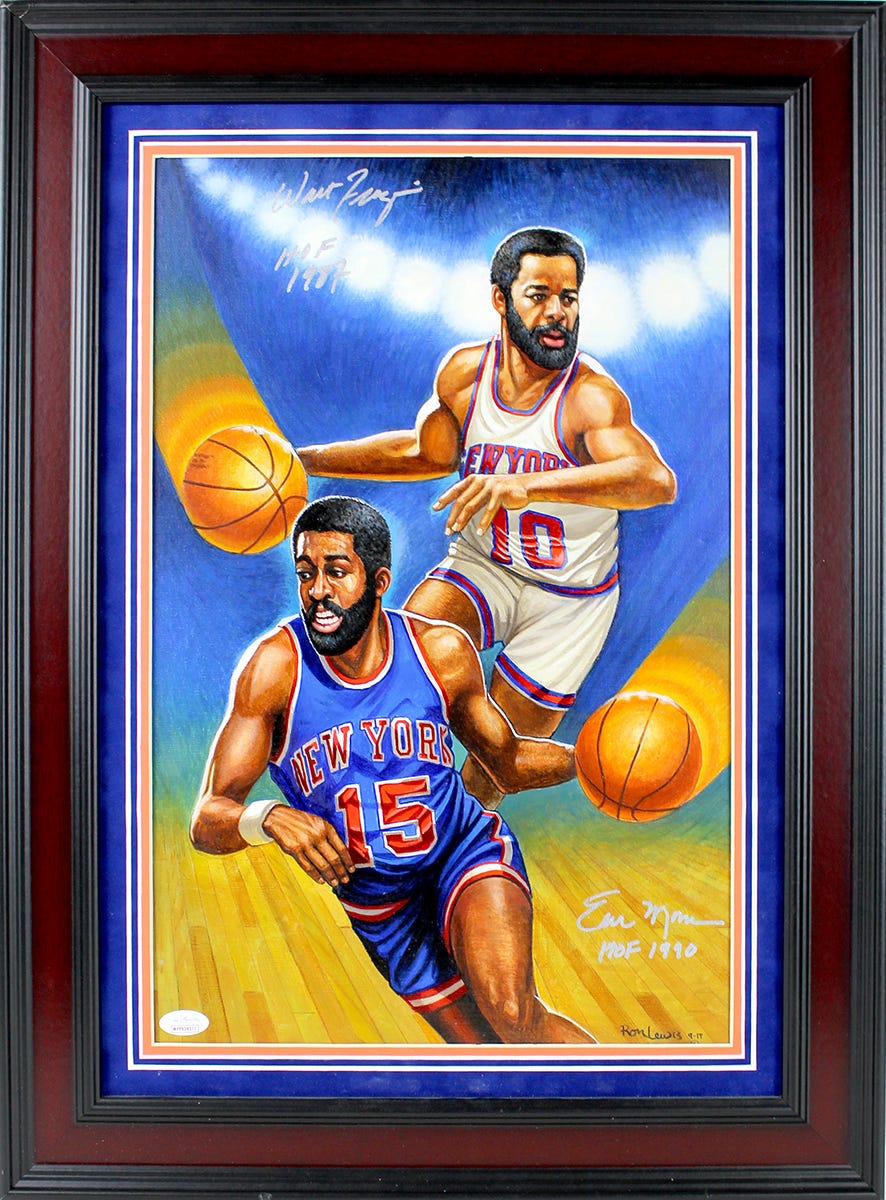
In 1973, Monroe helped lead the Knicks to the NBA Championship, scoring 23 points in Game 5 to secure the title against the Los Angeles Lakers. During the championship season, he averaged 15.5 points per game, and throughout his Knicks career, he maintained an average of 16.2 PPG, including 20+ PPG seasons in 1974–75 and 1975–76. Over nine seasons in New York, Monroe averaged 18.8 PPG, 3.0 RPG, and 3.9 APG, finishing eighth on the Knicks’ all-time scoring list with 9,679 points.
His style retained the excitement and creativity of his Baltimore days while blending seamlessly into the Knicks’ structured system. Monroe was also known for clutch performances, such as an 11-point burst in the final minutes of a comeback win against the Milwaukee Bucks in 1972.
Monroe’s professional career spanned 13 seasons, culminating in 1980 with a total of 17,454 points, averaging 22.2 PPG. His legacy on both teams was immortalized through retired jerseys, with the Knicks retiring his No. 15 and the Wizards (formerly Bullets) retiring his No. 10.
Monroe’s excellence and influence on the game were further recognized with induction into the NBA Hall of Fame in 1990, as well as being named to the NBA 50th Anniversary Team in 1996 and the NBA 75th Anniversary Team.
After retiring in the 1979–80 season, Earl Monroe moved smoothly into a new chapter of his life, becoming just as active off the court as he was on it. He built a career in business, media, and community work, starting Reverse Spin Entertainment, a multimedia company covering music, film, sports branding, and merchandise. He also managed music groups, launched a record label, and worked as a TV commentator at Madison Square Garden. Monroe later stepped into health advocacy, serving as a spokesperson for companies like Merck and Emblem Health, and helped create the Empire Pearl Fund, which supports tech startups across the country. After being diagnosed with type 2 diabetes, he became a national voice for healthy eating, diabetes awareness, and men’s health issues such as BPH. Alongside Walt “Clyde” Frazier, he also served as a spokesman for the American Heart Association, using his platform to promote healthier lifestyles.
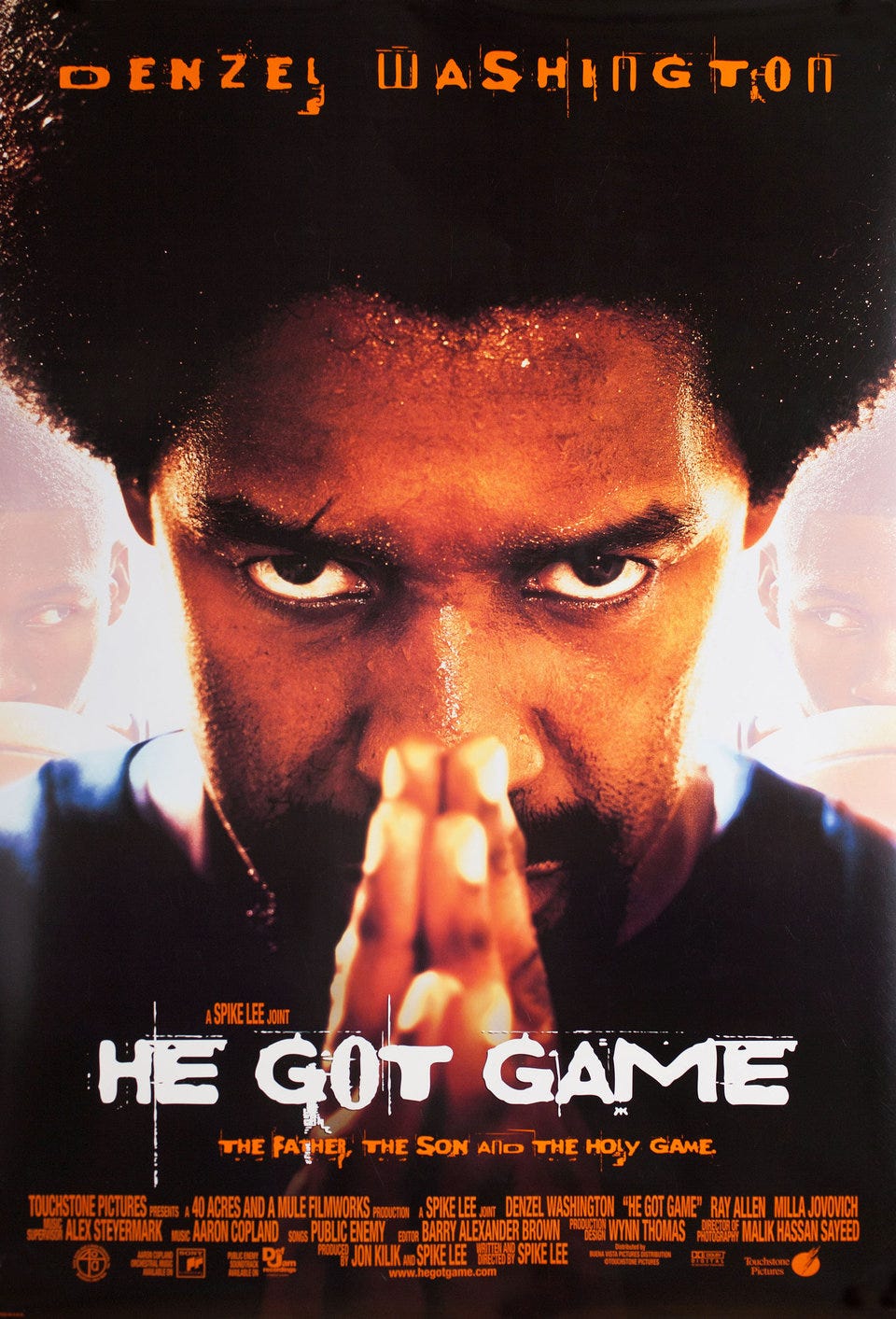
Monroe has always valued education, and that commitment shows in his work with the Earl Monroe New Renaissance Charter School in the Bronx, which opened in 2021 (mentioned it earlier in the article) The school isn’t just about creating basketball stars—it focuses on the entire world around the game, teaching students about careers in management, media, finance, and more. His involvement reflects his own journey and the mentors who pushed him to take school seriously. In the media world, Monroe has worked as a color analyst on Knicks radio broadcasts and even inspired elements of Spike Lee’s film He Got Game, including a character based on his nickname.
Salute to Earl Monroe, a true icon on and off the court, Earl “The Pearl” Monroe’s legacy stretches far beyond his spin moves, scoring bursts, and championship moments. His impact lives in the communities he serves, the students he inspires, and the generations of fans who still admire his brilliance. Peace and blessings, and thank you for reading another State article.